
By Meenakshi – Tech Enthusiast, Blogger, and Human in the AI Era
Introduction: The Moment AI Changed My Life
I still remember the first time I used an AI tool that wrote an article better than my first draft.
It wasn’t just impressive—it was terrifying.
For years, writing was my identity. Suddenly, a machine could mimic my voice, style, and creativity in seconds.
That moment made me ask a question millions are quietly asking today:
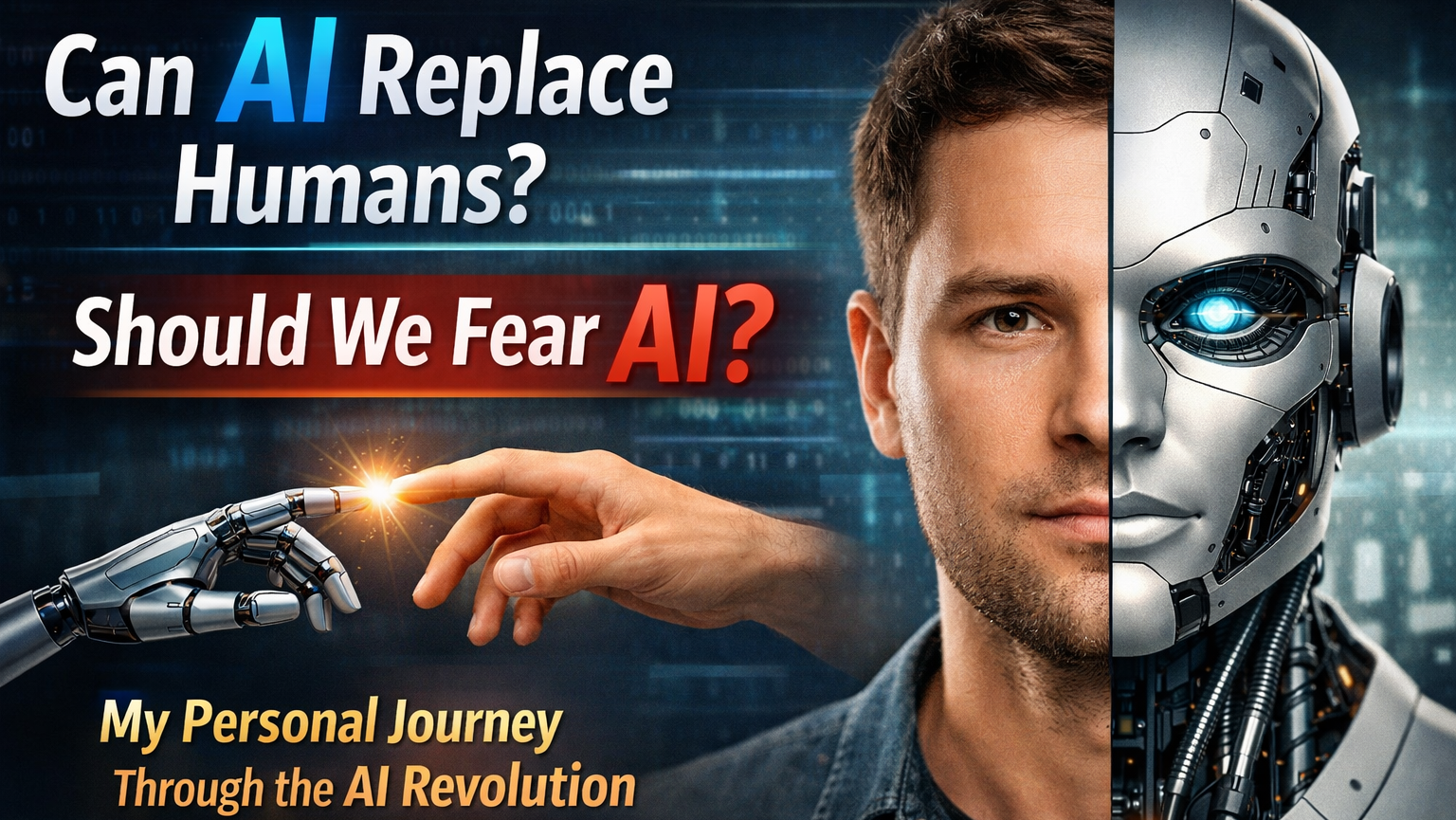
Will AI replace humans? And should we be afraid of it?
This blog is not just about technology.
It’s about fear, hope, creativity, jobs, identity, and the future of being human.
AI Today: Where We Stand Now
Artificial Intelligence is no longer science fiction. It’s in your phone, your job, your entertainment, and your daily decisions.
Key AI Statistics (2024–2025)
| Metric | Data |
|---|---|
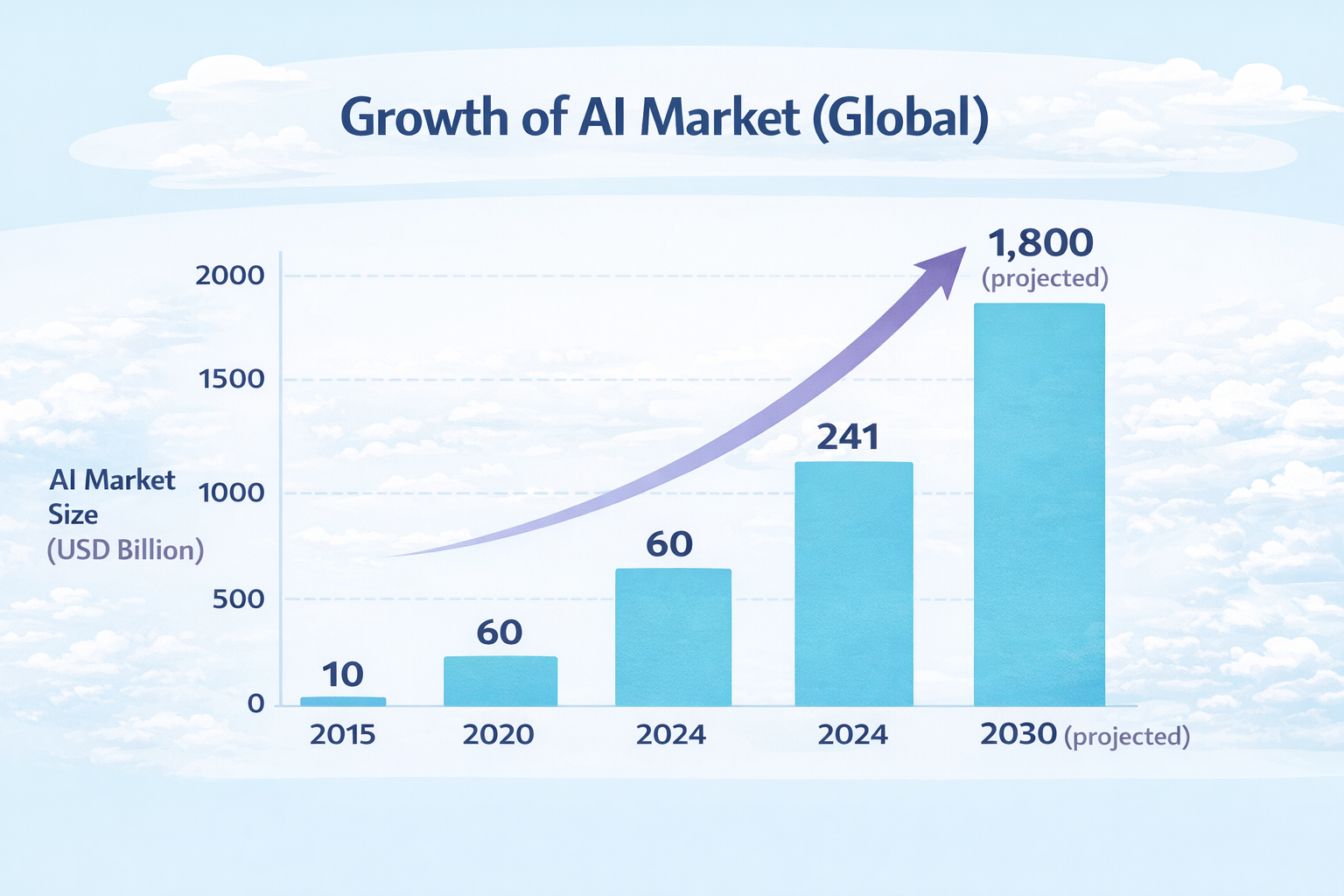
| Global AI market size (2024) | $241 billion |
| Expected market size by 2030 | $1.8 trillion |
| Jobs affected by AI automation by 2030 | 300 million globally |
| Companies using AI in operations | 75%+ |
| AI-generated content online (2025 estimate) | 30–40%Sources: McKinsey, PwC, Goldman Sachs, Statista, OECD |
Simple Chart: Growth of AI Market (Global)
My Emotional Journey with AI
When I started blogging, every sentence felt personal.
Now, AI can write entire blogs, scripts, music, and even novels.
At first, I felt empowered.
Then, I felt replaceable.
And then I realized: AI is not replacing humans—it is reshaping what it means to be human.
Can AI Replace Humans? The Realistic Truth
Short answer: No—but it will replace many tasks.
What AI CAN Replace
- Repetitive office tasks
- Data analysis
- Customer support chats
- Content drafting
- Manufacturing and logistics jobs
- Basic programming
What AI CANNOT Replace
- Deep emotions
- Moral judgment
- Human empathy
- Spiritual creativity
- Personal storytelling
- Leadership intuition
- Conscious experience
Case Study: AI in the Workplace
1. Customer Service
Companies like Amazon and Google use AI chatbots that handle 80% of customer queries.
2. Journalism
AI tools like GPT-based systems write sports and finance news reports.
3. Healthcare
AI detects cancer with 94% accuracy, outperforming some doctors—but doctors still make final decisions.
Should We Fear AI?
Fear is natural. Every major technology created fear—electricity, internet, smartphones.
But AI feels different because it touches human intelligence itself.
The Benefits of AI (The Bright Side)
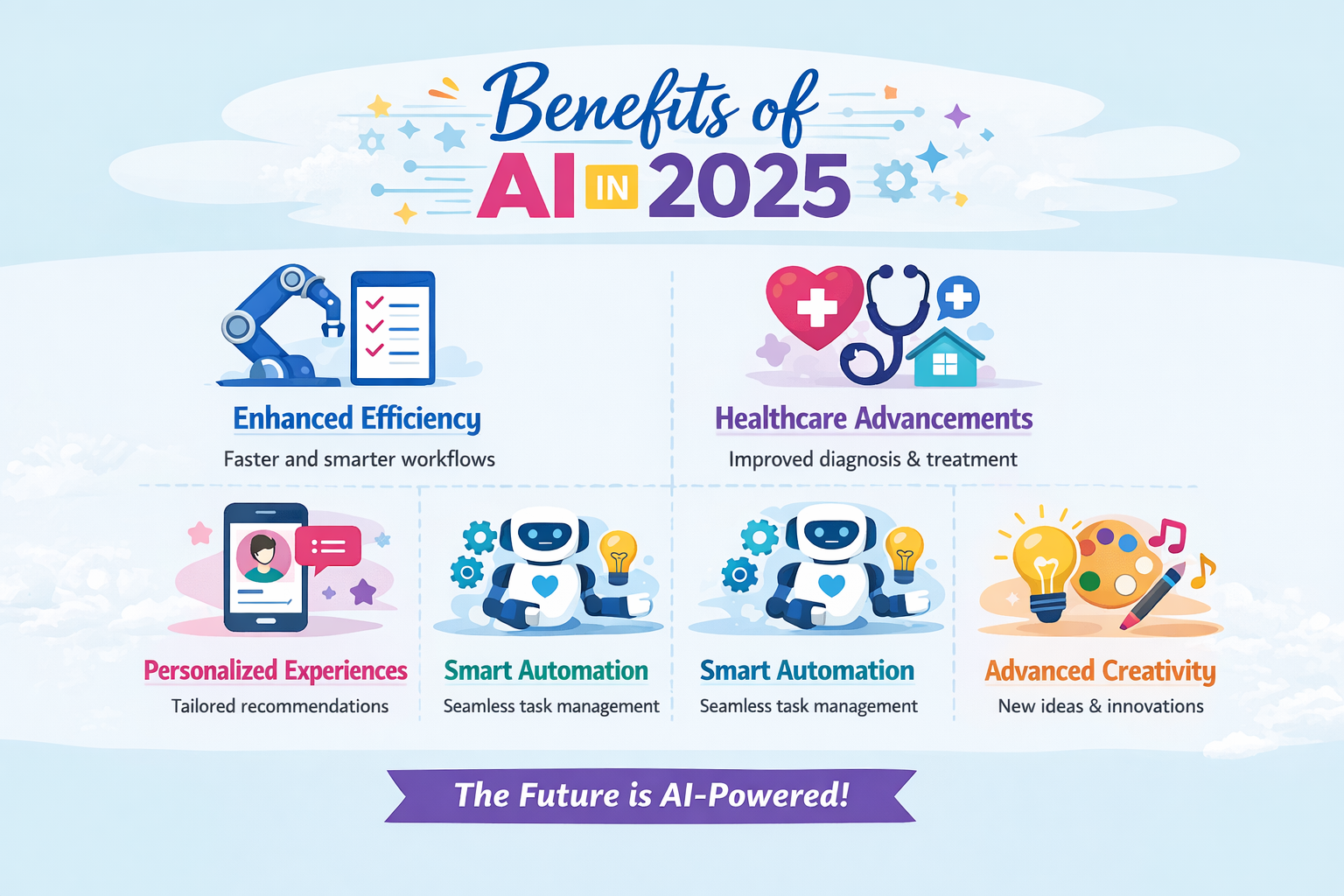 1. Productivity Explosion
AI can save professionals 20–40% of their time, according to McKinsey.
2. Medical Breakthroughs
AI is helping:
- Detect diseases early
- Design new drugs
- Analyze genetic data
3. Education for Everyone
AI tutors can teach anyone, anywhere, anytime.
4. Creativity Tools
Artists use AI to:
- Generate music ideas
- Create concept art
- Write story drafts
The Dark Side: Real Harms of AI
This is the part nobody wants to talk about honestly.
1. Loss of Creativity and Talent
We already see this in music, movies, and art.
Real Examples
- AI-generated songs flooding Spotify
- AI-written scripts being tested in Hollywood
- Artists complaining about AI remixing their work without credit
The Emotional Impact
When everyone can copy-paste creativity, original talent feels devalued.
Creativity becomes cheap.
Human struggle becomes invisible.
2. Copy-Paste Culture and Remix Syndrome
Today:
- Students use AI for essays
- Creators remix AI outputs
- Writers paste AI drafts without thinking
This creates:
- Shallow thinking
- Decline in imagination
- Loss of personal voice
3. Job Displacement
Predicted Jobs at Risk
| Sector | Risk Level |
|---|---|
| Customer support | High |
| Data entry | Very High |
| Content writing | Medium |
| Manufacturing | High |
| Legal research | Medium |
Source: Goldman Sachs, WEF
4. Fake Reality & Deepfakes
AI can:
- Create fake videos of leaders
- Generate fake voices
- Manipulate public opinion
This is a democracy-level threat.
5. Emotional and Psychological Impact
People already:
- Talk to AI instead of humans
- Use AI as therapy
- Build emotional bonds with machines
This could:
- Increase loneliness
- Reduce human relationships
- Blur reality
Bollywood & AI: A Real Case Study
In 2023–2024, Hollywood writers protested against AI script tools.
Why?
Studios wanted to:
- Use AI to draft scripts
- Pay writers less
- Replace junior writers
This wasn’t sci-fi.
It was real, and it scared creative professionals worldwide.
AI Music Platforms: Creativity Crisis
Platforms like:
- Suno
- Udio
- AI remix tools
Now generate songs in seconds.
Impact
- Thousands of AI songs uploaded daily
- Human musicians struggling to compete
- Copyright confusion
Will AI Kill Human Creativity?
Not entirely—but it will change it forever.
Future Creativity Types
- Pure human creativity
- Human + AI collaboration
- Fully AI-generated content
The danger is not AI.
The danger is humans forgetting how to create without it.
The Emotional Future of Humanity
Sometimes I imagine a future where:
- Books are written by AI
- Movies are generated instantly
- Music is personalized by algorithms
- Conversations are mostly with machines
It sounds convenient.
But it also sounds lonely.
Future Predictions (2025–2040)
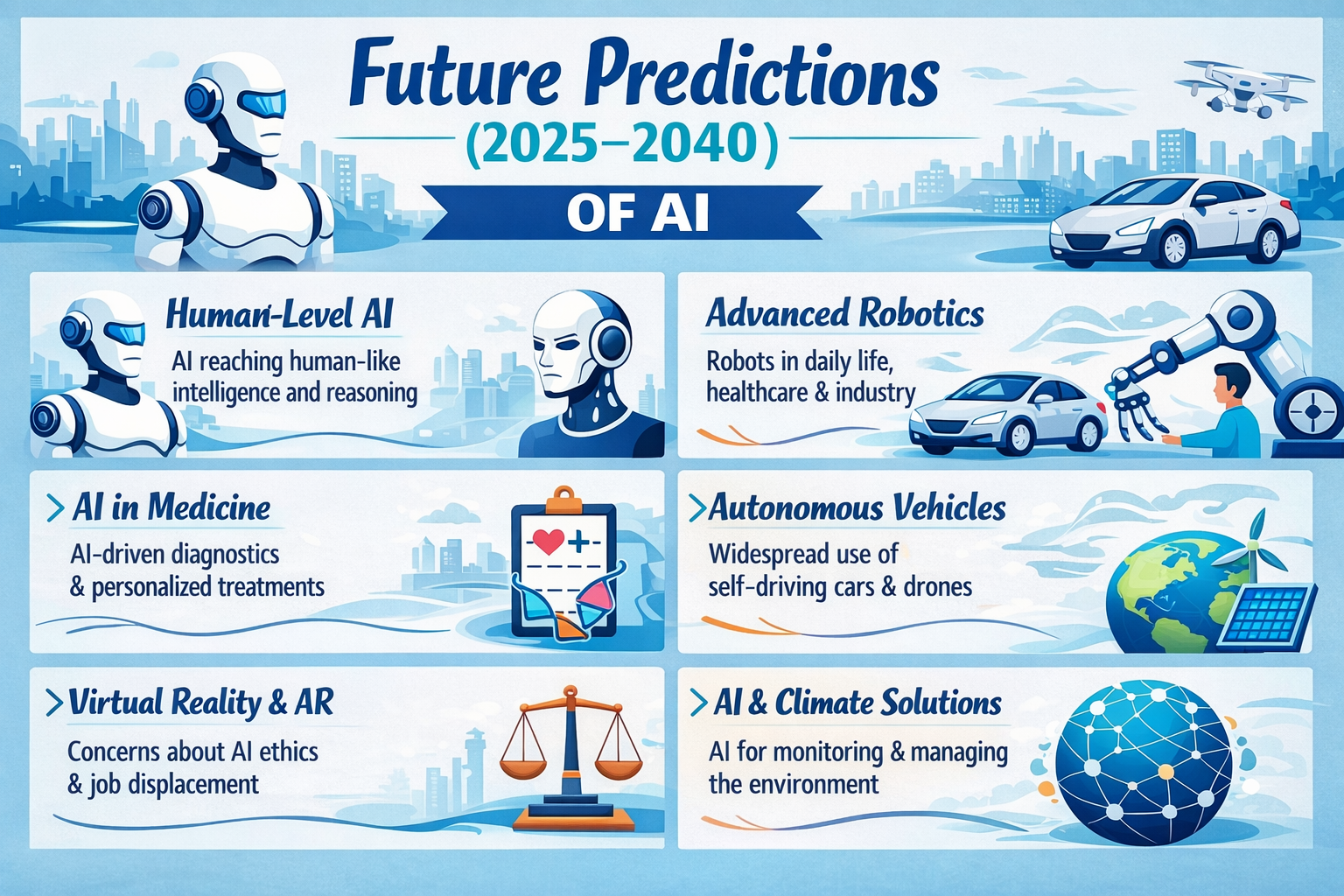 1. AI Co-Workers
Every professional will have an AI assistant.
2. AI Laws and Ethics Boards
Governments will regulate AI strongly.
3. Creativity Renaissance
Human-made art will become premium and luxury.
4. New Jobs
- AI trainers
- Prompt engineers
- AI ethicists
- Digital philosophers
Simple Future Projection Chart
Human vs AI Content Share Online2020 | AI 5%  | Human 95%
2025 | AI 35% | Human 65%
2030 | AI 60% | Human 40%
2040 | AI 80% | Human 20% (Projected)
Can AI Become Dangerous Like Movies?
Realistic Risks
- Autonomous weapons
- Economic inequality
- Mass unemployment
- Misinformation chaos
Sci-Fi Myths
- AI taking over the world
- Conscious robot gods
- Human extinction by AI
Reality is less dramatic—but still serious.
My Personal Conclusion: Should We Fear AI?
I don’t fear AI.
I fear humans who use AI without ethics.
AI is a mirror.
It reflects our intelligence, greed, kindness, and stupidity.
How Humans Can Stay Relevant
1. Learn Critical Thinking
AI cannot think deeply like humans.
2. Focus on Emotional Intelligence
Empathy is the future skill.
3. Use AI as a Tool, Not a Crutch
Create first, then enhance with AI.
4. Develop Original Voice
Your story is your superpower.
Final Emotional Message
I started this journey afraid that AI would replace me.
Now I see something bigger.
AI is not the end of humanity.
It is a test.
A test of:
- Creativity
- Ethics
- Humanity
- Wisdom
The future will not belong to AI.
It will belong to humans who know how to live with AI without losing themselves.